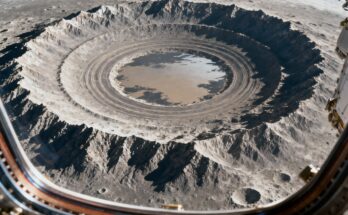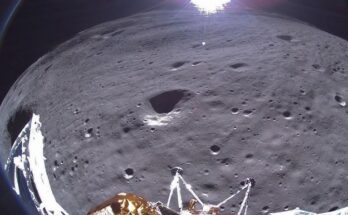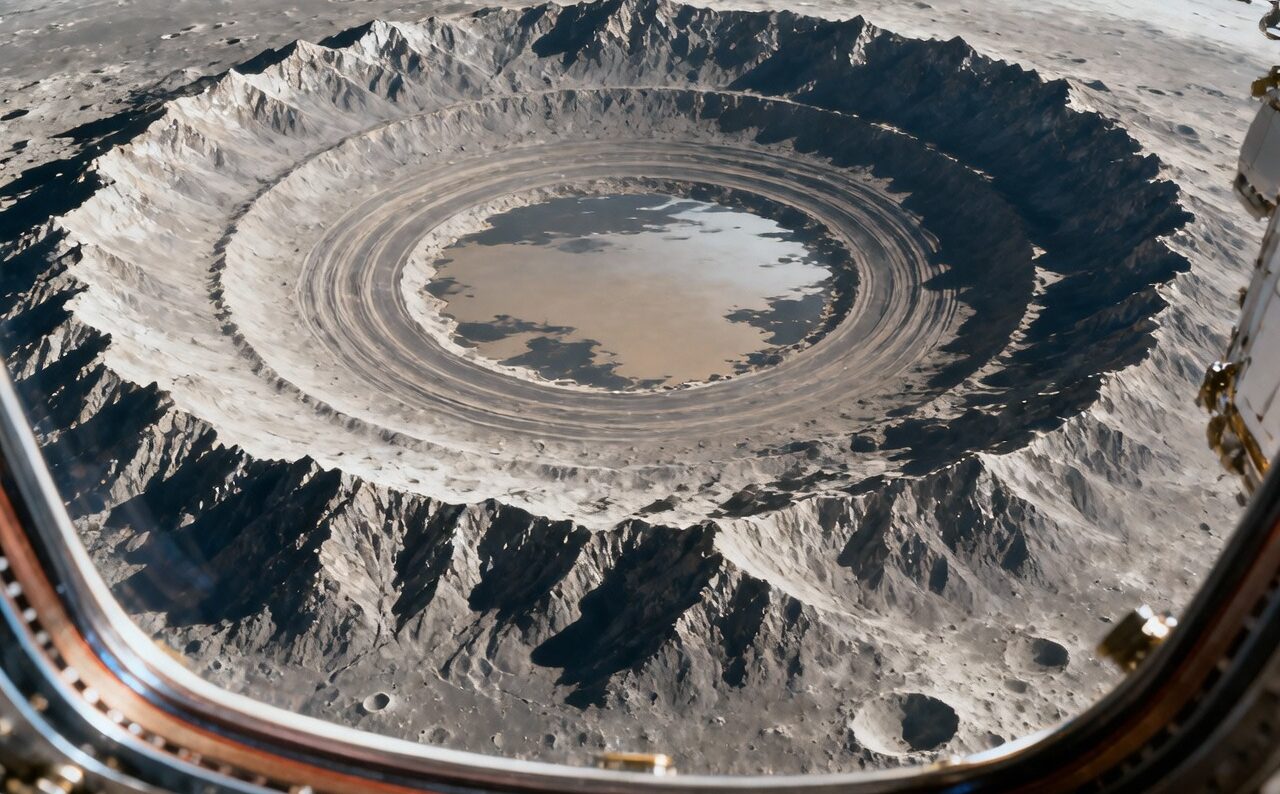
Artemis II astronauts are scheduled to observe a previously shadowed lunar region under direct sunlight for the first time during their upcoming crewed flyby, offering a rare opportunity to study how illumination reveals hidden surface structures on the Moon.
The mission, led by NASA, will carry a crew of four aboard the Orion spacecraft as it travels on a free return trajectory around the Moon at distances reaching roughly 370,000 to 400,000 kilometres from Earth. During this approximately 10-day mission, the spacecraft will pass over lunar regions that have historically been difficult to analyse due to limited lighting angles, allowing onboard cameras and sensors to capture high-resolution imagery under direct solar exposure. This shift in lighting is critical because the Sun’s angle can dramatically change how geological features appear, revealing textures, depth, and composition that remain obscured in shadow.
In simple terms, areas that once looked flat or indistinct may suddenly show ridges, craters, and layering when sunlight hits them directly. Scientists use this effect to better understand surface age and formation processes. One research driven pattern observed in planetary imaging is that low angle shadows exaggerate relief, while direct overhead sunlight reduces contrast but improves material composition analysis, helping researchers distinguish between rock types and regolith density.